|
How
to Produce Concrete Pipe
Since the beginning
of civilization, conduits have been used for the transportation of
water, industrial wastes and sewage. Perhaps the most permanent conduits
were formed of reinforced concrete pipe. Modern sanitation was made
possible in large part through the use of concrete sanitary sewer pipe.
Concrete is one of the most versatile, durable and economical conduit
materials available for storm sewers, sanitary sewers and irrigation
lines.
As a result of
advanced technology and design, the use of concrete pipe continues to
increase throughout the world. Engineers and specifying agencies have
recognized it as a permanent, cost-effective system for transporting
liquid and waste materials. Once in place, properly designed underground
pipelines require no upkeep or operational expense and retain their
serviceability for many years.
Three
Common Processes
Today, there are
three commonly used processes for producing precast concrete pipe: dry
cast, packerhead, and wet cast. The first two, dry cast and packerhead
(conventional or bi-directional) are classified as immediate strip
methods. (The word "strip" refers to the removal of the form
from the pipe.) "Immediate strip" is characterized by the use
of no-slump concrete, which is sufficiently compacted during the
pipe-making cycle to permit removal of the inner core or outer form as
soon as the pipe has been produced. Thus, the form is available for
re-use any number of times during the day.
Dry
Cast
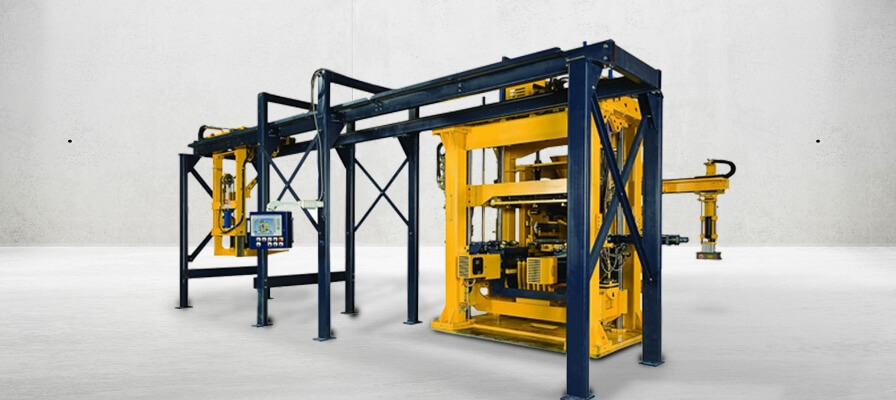
The dry cast process
conforms to the basic principle of making a pipe by consolidating
relatively dry concrete between an inner core and an outer form.
Vibration is used to distribute and densely compact the mix. Lengthwise
compression of the pipe is often employed to supplement the vibration.
This vibration may be external electric, hydraulic (on the form),
internal hydraulic or pneumatic (inside the core).
Dry cast pipe
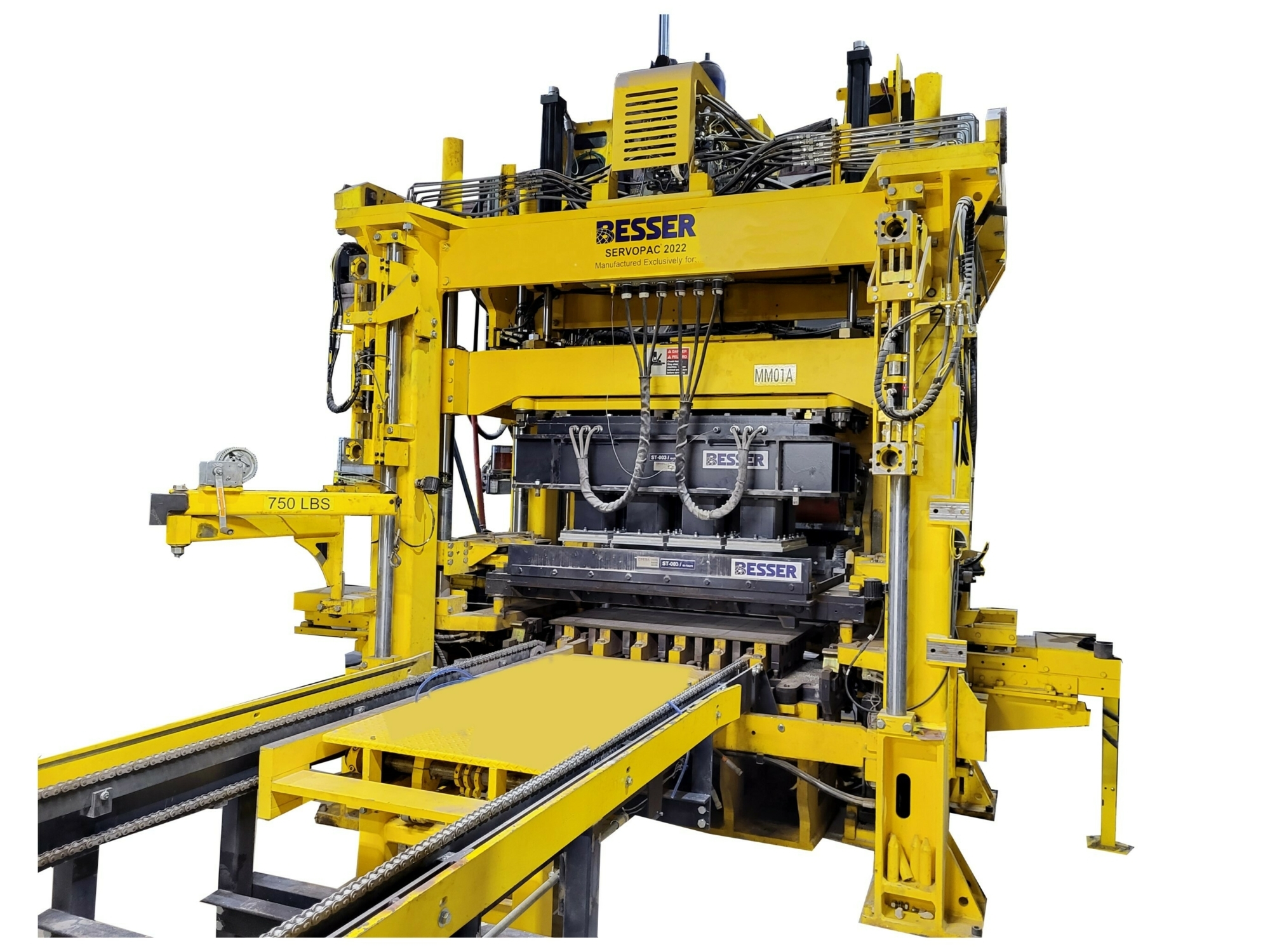
machines may be either one, two or three station models and these
various models can generally cover a size range from 12" to
156" (300 mm - 4000 mm) in diameter in lay lengths of 8’, 12’,
and 16’ (2.5 m, 3.5 m, and 5 m). These machines are unique because
they can make a wide variety of shapes and types of concrete products
such as round pipe, elliptical pipe, arch pipe, pre-bed, box culvert,
and PVC-lined pipe.
Packerhead
The other immediate
strip method is the packerhead process. Packerhead models can make round pipe from 6" - 84" (150 mm -
2100 mm) in diameter and in lengths up to 1’ - 12’ (.3 m - 3.5 m).
This type of pipe is used for storm and sanitary sewers as well as
irrigation and drainage applications.
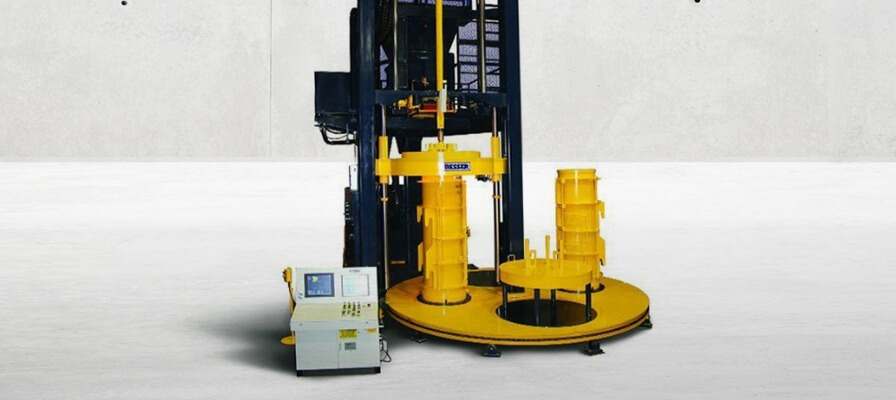
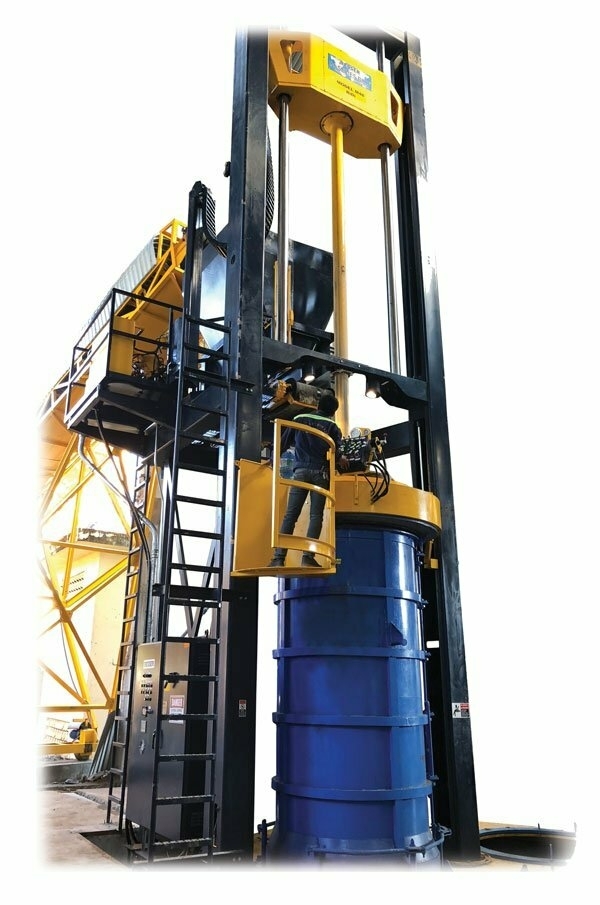
In this production
process, dry (no-slump) concrete is fed into an outer form to make the
exterior of the pipe. The interior of the pipe is shaped by a rapidly
rising and revolving mechanism called a rollerhead, which compacts the
concrete radially outward against the inside of the form. On
conventional pipe machines, all rollerhead elements rotate in the same
direction. On bidirectional pipe machines, the rollerhead and trowel
rotate in opposite directions, ensuring that torsional stresses are
eliminated in the green pipe. The rollerhead is mounted on the end of a
long spinning shaft and turns within the form to roll and pack the pipe
to the proper density while the form itself remains stationary.
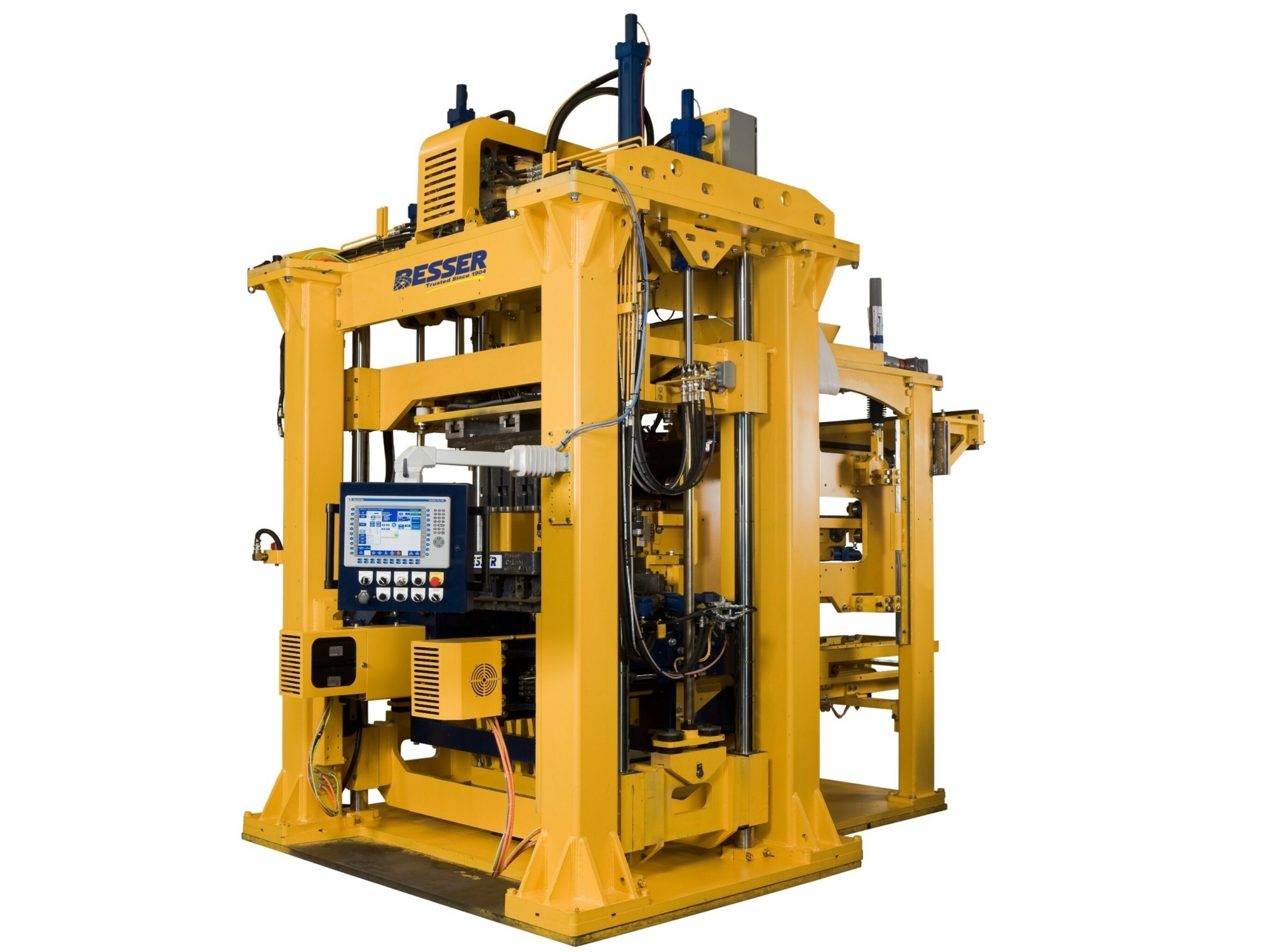
Right: BiDi has
eliminated cage twist problems while producing a pipe with excellent
wire-to-concrete bond.

Above:
BiDi Advantage Series concrete pipe machine.
Wet
Cast
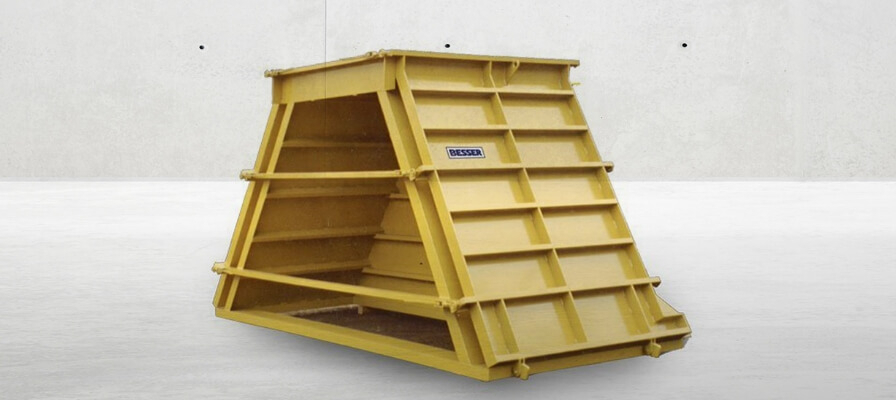
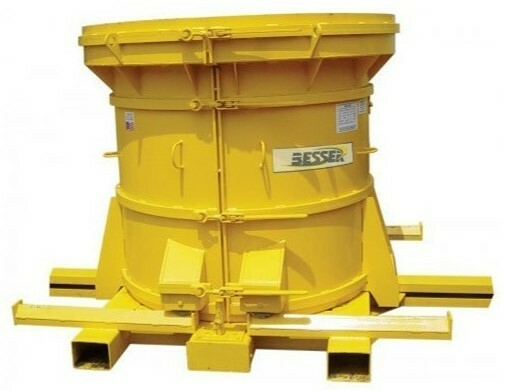
The wet cast
manufacturing process uses a relatively wet concrete mix. The pipe is
made vertically in the annular space between an inner core and an outer
form. This process is most commonly used for large diameter pipe
production where the pipe sections are manufactured, cured and stripped
at a single location.
Depending on the pipe
diameters and lengths, various numbers of external vibrators are
attached to the forms for consolidating the concrete. The forms are
freestanding and no machine is involved in production. Usually, several
forms are set up at the same time so a pouring line can be established.
Wet casting is a very
versatile process. Because there are no constraints of a machine frame,
pipe may be cast in several lengths. Pipe of many lengths and diameters
may be intermixed in the casting line. Lengths of 24’ (7 m) are
common, especially for use in wide-open terrain and outfall lines.

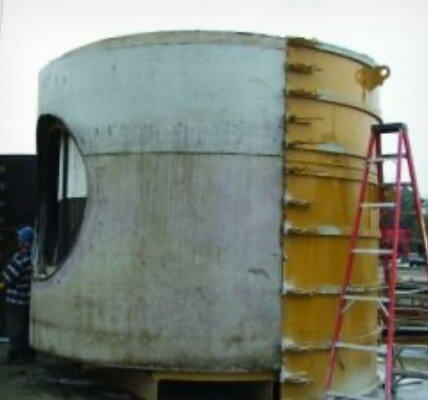
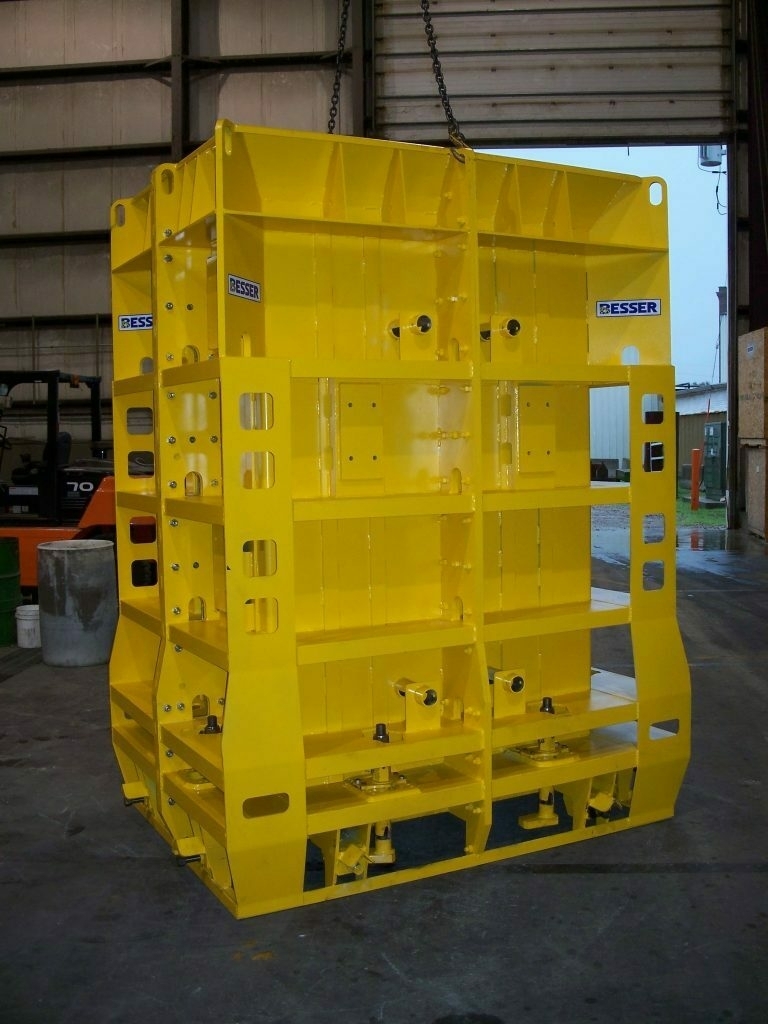
Above: Pre-cast applications for the concrete industry.
Choosing
a Process
Many conditions
dictate which concrete pipe making process is best for the individual
job or producer. These include such factors as pipe diameters and
lengths to be made, quantities of pipe, availability of equipment and
labor, and actual application of the end product.
A specifying agency
is responsible for making sure that job specifications are clear and
properly reflect what is needed and expected. It is then up to the
producer to determine the best way to comply with these pipe
specifications and requirements.
|